Combined Technique Variants in Mechanical Thrombectomy

The combined stent-retriever–aspiration technique merges the advantages of both systems - mechanical clot integration and anchoring from the stent retriever, with suction and flow control from the aspiration catheter. Two major variants have evolved in practice, each optimized for different vessel anatomy and thrombus characteristics.
1. The Ingestion Technique
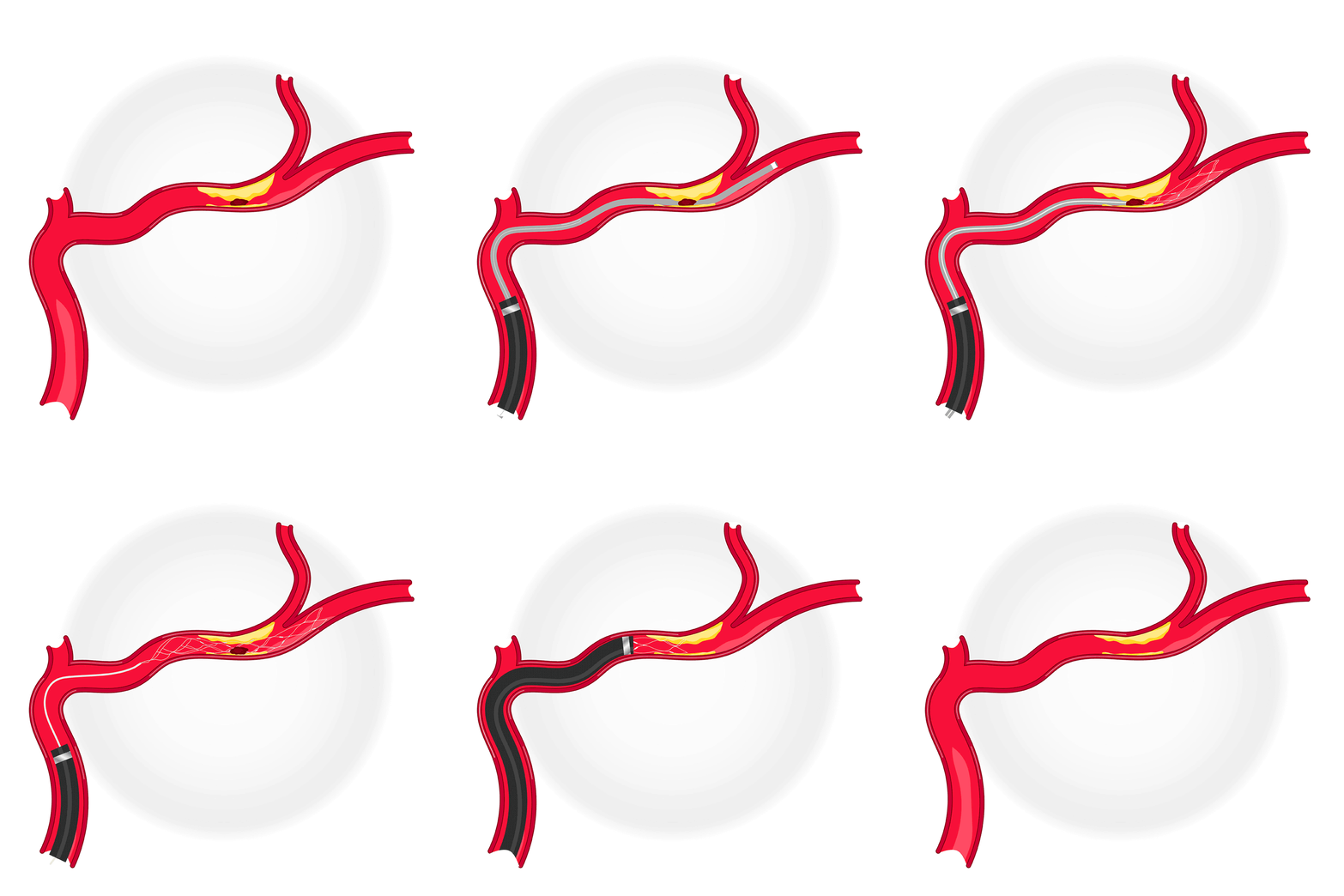
Concept: After deploying the stent retriever, the aspiration catheter is advanced to the clot interface and continuous suction is maintained while gently pulling the stent retriever into the aspiration catheter.
Best suited for:
- Small or ICAD-related thrombi, where full clot ingestion is achievable.
- Tortuous or stenotic access, where stable re-approach may be necessary.
- Cases where a quick transition to aspiration-alone is desired without losing position.
Advantages:
- Continuous aspiration minimizes distal embolization.
- Enables fast re-navigation if the first pass fails.
- Safe even with proximal permanent stents, as the device remains undisturbed.
Caution:
- May cause partial clot shearing, especially with larger thrombus lodged in a normal caliber vessel. The thrombus size will be larger than the aspiration catheter inner diameter in this case and ingestion can cause clot shearing.
- When pulling the stent retriever into the aspiration catheter, the catheter itself can advance forward. Park the aspiration catheter slightly more proximal to anticipate this movement.
2. The Pinching Technique
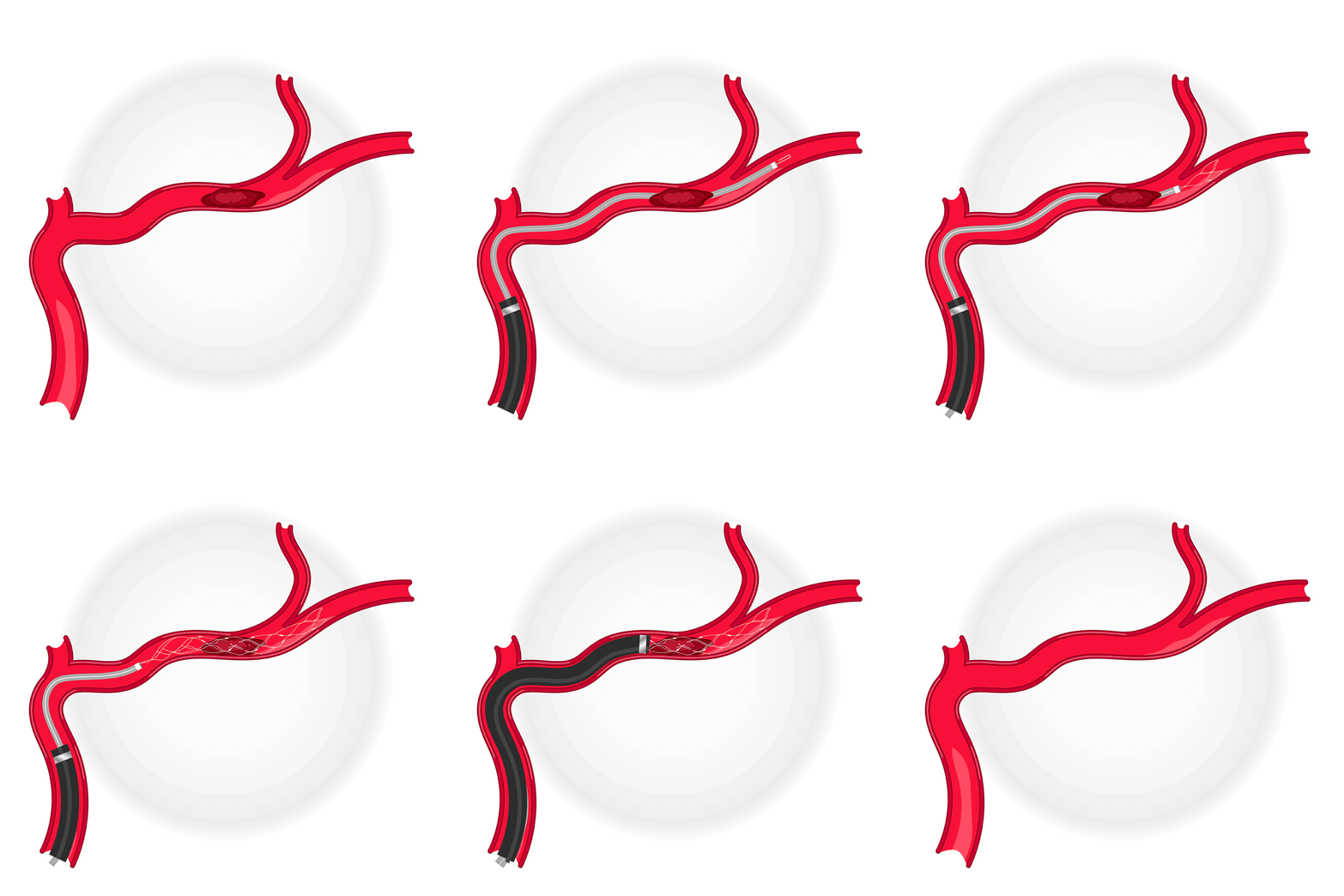
Concept: Both the stent retriever and aspiration catheter are withdrawn together under aspiration, trapping the clot between them like a mechanical forceps.
Best suited for:
- Embolic clots without underlying ICAD.
- Thrombi similar in diameter to the vessel lumen, where aspiration-catheter ingestion is limited.
- Straight or mildly tortuous anatomy, where coaxial traction can be maintained.
Advantages:
- Strong mechanical grip on firm or fibrin-rich clots.
- Reduces risk of distal embolization or clot fragmentation.
Caution:
- Coordination is critical: differences in device slack can cause relative movement during retrieval (e.g., the aspiration catheter may advance).
- If retrieval fails, the need to re-navigate both devices can prolong the procedure.